About Joyce Griggs
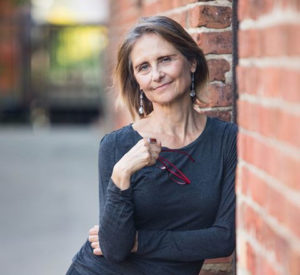 I am a knowledgeable healthcare consumer. My life and career have been intertwined with the Healthcare System since the 1990s.
From working in voluntary health organizations like the American Diabetes Association to becoming an advertising executive and consultant for the pharmaceutical industry, (to the three pharmacists in my family!), I’ve gained a variety of unique insights on healthcare professionals and institutions. I’ve had the privilege of engaging with some of the leading scientific minds across a broad spectrum of categories including vaccines, oncology, mental health, and rare diseases.
When it comes to healthcare delivery, I know what works and what doesn’t; patient and provider pain points; insurance and payer challenges; the tremendous investment into research; the elation when a lifesaving medicine comes to market as well as the callous business decisions that leave some on the laboratory bench.
All in all, I felt well equipped to address the challenge of a health crisis if and when it occurred in my immediate circle of beloved friends and family. What I learned is how hard it is to make your way through the US healthcare system even with deep knowledge and a circle of knowledgeable colleagues and friends. What I found is that even when the process goes reasonably well, the walls, barriers, and emotional toll are staggering.
Advocating for my Ex-Husband’s Care
Late in the summer of 2018, my husband (now ex-husband) elected to have a knee replacement. This became a precipitating event in a “long and winding road” that played out in a series of health crises. Navigating his care was like a game of chutes and ladders. I would move around the board, get very close to what seemed to be clarity only to fall through a chute and wind up in a completely different destination than expected. Each descent through the next “chute” came with its own set of challenges, questions, unwritten rules and players.
Driven by Love, Calling, and Healthcare Experience
Even though we were separated and essentially living apart, I helped my husband through this crisis that began in Aug 2018 and ended in Nov 2019. Many people have asked me why I stayed so involved since we were separated and in the process of divorcing—There are two answers: Love and Calling. If you have ever felt “Called” to a place, a job, an avocation then you know what I mean; if you haven’t, I’ll try to explain what is essentially the unexplainable. It was a Calling and so I followed where those internal nudges led. In all of it, I kept a singular mantra, to put myself first, which is an interesting and essential perspective to maintain when you are playing the role of advocate for another. I needed to maintain the right boundaries for my own health while taking the steps that I knew intuitively would make a difference in his care and ultimately lead to a positive resolution. The deep nudge inside to continue to challenge what was unfolding before me vis a vis my ex-husband’s care served as a kind of internal compass that I followed nudge by nudge; insight by insight.
When my ex-husband’s recovery from the elective surgery became a 5-alarm crisis, I felt literally compelled to advocate, question, dig and confront — which is what I did with the support of friends, a few amazing health care workers (primarily nurses), and my ex-husband’s family. Together we were able to navigate through—learning a lot and getting my husband on the road to health and well-being—physically, mentally and spiritually.
The Power of Storytelling: The Creation of United States of Healthcare
I was flabbergasted by the lack of coordination of care. I knew I could not let these “stories” go untold. The disorientation, the head spinning, mind-numbing situations of my own experience as a caregiver led me to create this platform: United States of Healthcare: navigating the Healthcare System and living to tell the tale.
Absorbing Different Perspectives & Industry Insights
My resolve to move forward with the creation of United States of Healthcare was solidified while attending South by Southwest (SXSW) 2019; a beloved conference that I enjoy as it always inspires me and a week in Austin in early spring is a blast. I went to SXSW interactive looking for ideas for clients and this time I found some solutions for myself.
The healthcare sessions are where I spend most of my time and that year I chose a Meet Up on Patient’s being in control of their own healthcare. It was an interesting mix of patient advocates, healthcare providers, policy makers, healthcare journalists, and health-tech-solution designers. We sat in a large circle and all shared our perspectives on what could make healthcare delivery better. Some were in the data camp;if we have unfettered access to our data, then we are in control of our health. Others like me believed that data are only one part of the solution. Better communication and shared decision-making between healthcare providers, patients and caregivers needs to be coupled with greater access to our health data.
Gathering Stories to Connect to What Can Be
Around that circle I heard a number of stories from people who were not so much at odds with their providers, it wasn’t provider bashing, but recounting a struggle with a system that would not hear them. Or could not hear them. I wasn’t sure which. I wanted to find out more. I also realized there was a tremendous amount of collective experience and hard won expertise. I knew in my own case, in the last 8 months alone, I had earned a doctorate in navigating the US healthcare system from the university of first-hand experience. There were people in that conference room, overlooking the festival food trucks, who represented a treasure trove of experience and innovative thinking on how to engage and challenge a system so that they and their loved ones could live in wellness.
Afterward, a few of us gathered and while talking in this small group, clarity of purpose struck like lightning. I decided to start collecting stories and to tell my own. I silently vowed to create a forum where all members of the community can begin to say, no, that’s not the way that it should be done and here’s a different way to work together–patients and healthcare providers. This collection of experiences is meant to ignite new ways of challenging what “is” so we can get to what can be. The vision is to challenge the status quo and the creativity and innovation killer: “But that’s the way we’ve always done it.”
“Maybe stories are just data with soul.” [Brene Brown]
As I reflect on my own story of navigating the healthcare system as an advocate and caregiver for my ex-husband, we touched on so many facets of health: addiction, elective surgery, primary care, HIPAA, medication management, mental health care, long-term care, home care, lack of continuity of care. Our story is rich with important inflection points; shining light, opening eyes and reshaping how care is delivered, how care providers interact and what policy and other levers can be pulled to ensure a more human experience for all of us.